
Core Concept: Low Impact Development (LID) is an innovative stormwater management approach that mimics nature by managing rainfall right where it lands.
The Traditional Problem: Conventional development seals the ground with asphalt and concrete. This turns rain into destructive, polluted runoff that overwhelms local infrastructure.
The LID Solution: LID views rainwater as a valuable resource rather than a waste product. It uses engineered, natural systems to filter, store, and infiltrate water back into the ground on-site.
Cost Efficiency: LID reduces infrastructure costs by minimizing the need for expensive underground pipes, concrete vaults, and massive retention ponds.
Maximizing Land Use: By integrating stormwater controls directly into landscaping, developers can often free up more buildable or leasable square footage.
Regulatory Compliance: Meeting local environmental, water quality, and peak-flow standards becomes simpler, accelerating the permitting and approval process.
Enhanced Marketability: Green features increase property values, lower long-term maintenance costs, and attract eco-conscious commercial tenants and homebuyers.
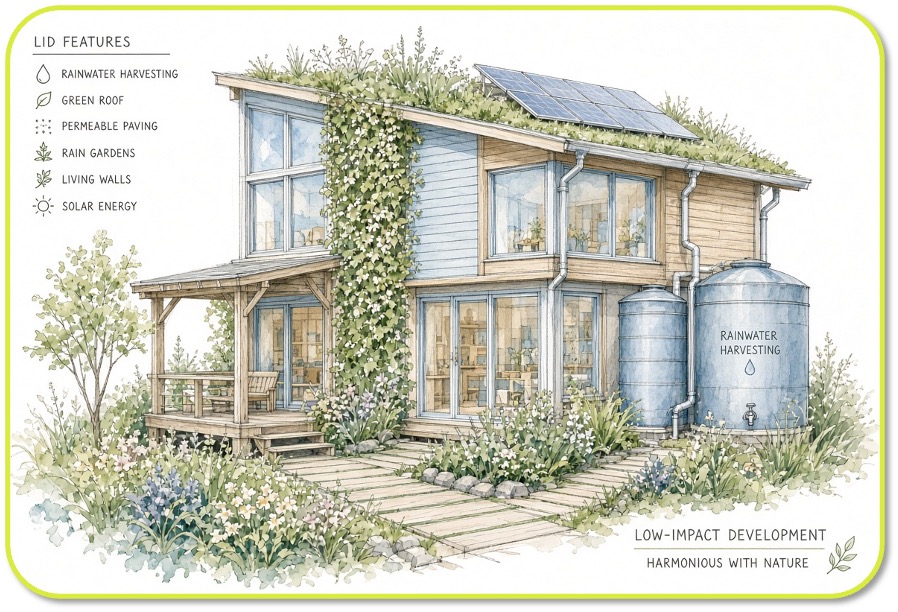
Bioretention & Rain Gardens: Shallow, landscaped depressions planted with native vegetation that capture and filter driveway and roof runoff.
Permeable Pavement: Interlocking pavers or porous concrete for driveways, sidewalks, and patios that allow water to sink directly into the soil.
Green Roofs & Rainwater Harvesting: Vegetated roof systems that absorb rainfall, coupled with cisterns or rain barrels to collect water for landscape irrigation.
Preservation of Natural Features: Clustering homes to preserve mature trees, natural wetlands, and existing native topsoil.
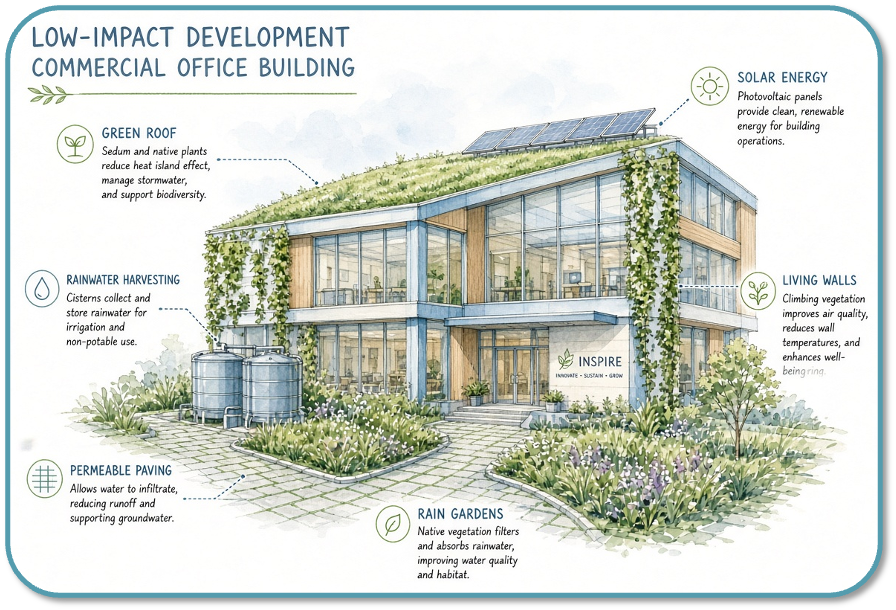
Constructed Wetlands & Bioswales: Engineered, vegetated channels designed to slow down, filter, and convey heavy stormwater runoff from massive rooftops and parking lots.
Permeable Parking Lots: Utilizing porous asphalt or grid systems in overflow parking areas to significantly reduce total site imperviousness.
Subsurface Infiltration: Underground gravel beds or structural chambers beneath parking decks that temporarily store water and recharge groundwater.
Tree Box Filters: Mini-bioretention systems installed along urban curbsides to intercept and treat highly polluted street runoff before it leaves the property.
Step 1: Early Integration: Incorporate LID concepts into your initial site feasibility studies before layout design begins.
Step 2: Know Local Codes: Review municipal ordinances, as many local governments offer density bonuses or expedited reviews for LID projects.
Step 3: Consult Experts: Partner with civil engineers & landscape architects specializing in green infrastructure.
Contacts & Resources
Local Planning/Permit Dept.: (918) 341-2066
US Army Corps of Engineers LID Guides: